Outside Insights- Why Do I Hike Big Mountains?

Outside Insights- Why Do I Hike Big Mountains?
Steve Jobs once said, “If you really look closely, most overnight successes took a long time.” Man, am I familiar with this phrase. Many years ago, I decided to become an entrepreneur – my first company, the CBI Group, was born. At that time, I believed that every hour I worked would equate to future value. I felt an overwhelming need to get my business off the ground. I worked incredibly long hours for months on end – at times 18-hour days. I didn’t take days, weekends, or holidays off. My kids were little but I was lucky enough to have a supportive spouse that allowed my singular focus to be my business. My life was work. I am happy to say that in those first years, CBI Group did grow. This success paved the way for the tremendously successful reintroduction of my second business, Placers, in 2011. Our success was 18 years in the making (and still counting). But this success came at a great cost – my health and wellness. For 18 years, I didn’t make time for myself – on my list of priorities, physical and mental wellbeing must’ve been close to the very bottom. I regularly have epiphanies that remind me to prioritize my health. It first happened when I was at an event and saw myself on the jumbotron – I turned to my wife and asked, who is that overweight guy? It was me. I’m reminded when I drive home from doctor appointments, and during weeks where I feel particularly depleted. These moments demand that I need to hit pause. Success takes time and effort. To achieve great things, you need to put a lot of blood, sweat, and tears into it. But work can’t be everything – your mind and body only have so much to give. You need to find something that renews that fire within your spirit. You know – that raging fire when you have a big, bold idea – when you feel like you can take on the world. You need to stoke this flame – or you will most certainly fade out, my friend.

Find three things that renew your spirit 

Here’s what renews me: I read: I love to learn – that’s why we have a book club here at Placers. I do yoga: It is very grounding – we even have weekly yoga sessions in the office. I hike: It is in the midst of towering pine trees that I feel centered. With every deep breath of fresh, brisk air, I find balance. With every step up to the peak, I am disciplined. Our conference rooms are even named after mountains.

“Thousands of tired, nerve-shaken, over-civilized people are beginning to find out that going to the mountains is going home; that wildness is a necessity, and that mountain parks and reservations are useful not only as fountains of timber and irrigating rivers, but as fountains of life.”

– John Muir

The world can be crazy. We’re bombarded by technology, and there seems to be an expectation that we remain accessible at all times. We’re constantly stimulated by outside distractions that we often forget to check-in where it truly matters – on the inside. How are you feeling? Do your thoughts make you anxious? Do you lack energy? Are you missing your spark? If so, how can you expect yourself to do great things you’re capable of? Take care of yourself first – it is only then that you can move mountains.  When my spirit is renewed, I am a better father, husband, colleague, and business owner. Hiking isn’t a hobby – it’s my savior. The question now becomes what do you do to renew your spirit? If you struggle to answer this question, go take a walk in the woods. Reflect on it – but find something. Your dreams depend on it.

Outside Insights: The Lake of Life

Outside Insights: The Lake of Life

As a member of the Scaling Up community, a strategic coach, and a business owner of a growth-oriented mid-market company, I have had the pleasure of learning life lessons from some of the best leaders and entrepreneurs on the planet. I discuss one of my favorites below – and how I’ve used it to better my life outside of business.


If you haven’t guessed by now, I’m always striving to learn more – to identify and fill my gaps. Most recently I found myself a student of Shannon Susko’s lessons. Shannon is an entrepreneur, CEO, best-selling author, and business coach. Currently, I’m inspired by one of her books – 3HAG Way. I suggest you check it out if you haven’t already! In one of her lessons, Shannon asks leaders to visualize their marketplace in its totality as if it were a lake that they fish in, and then to ask themselves these questions:


  • Who is in the lake with me?
  • Who am I competing with?
  • What are the key relationships that feed my lake?
  • Who are my key suppliers that add value to my business?
  • Where do my customers come from? What channels?
  • What associations am I part of?
  • Who is my customer?

The real value of the exercise is the thought processes it prompts leaders to navigate, and the epiphanies that come as a result. Are they over-dependent on one supplier? Is there someone who can help their business create more value? What relationships are hurting their business? Take a moment to ask yourself these same questions.


Who is in your personal pond?

This concept got me thinking past my business – did I know who was in my personal pond? My mentor taught me many years ago that it’s hard or impossible to achieve big, or even small things, alone. We can never be smart enough or have enough time and expertise to reach our full-potential by ourselves. We all need support systems. And I don’t just mean business owners – this lesson applies to any adult, or even teenager.


Building a personal pond means intentionally selecting the key relationships that will help you live your best life. Think of it this way. You could do your own taxes or you could sell your house by yourself – but if you have a network of people who can help, why would you do it alone?


Identifying who exactly will be in your personal pond comes down to determining what you need – and what you want. The key is to surround yourself with people who believe in what you’re doing and where you’re going. These need to be mutually beneficial relationships – if you want a lot, you need to be willing to give a lot.


For me, I have built a meaningful partnership with my accountant over the past 25 years. His financial expertise is equal only to his knowledge about me personally, my business, and my family – both good and bad. This partnership took work – but Ralph always returns my call. This is the same for my lawyer, real estate agent, insurance agent, banker, doctor, trainer, and even my handyman.


So, take a moment right now to think about the people in your personal pond. Write their names down. How do they help you get one step closer to closing your personal gap? The gap that exists between where you are and where you want to be. Do you feel comfortable calling on them for support? If not, how can you work to strengthen your relationships? In what ways can you support them? Your personal pond will be ever-evolving. People will come and go as your goals change as well as their own. This is ok. This is expected. But even though it is fluid, at any moment your pond should be full of connections you can count on and that can count on you.

Who do you have in your personal pond? How have they helped you reach your goals? How have you helped them? Reply and let me know!


Outside Insights: The Third Purpose of a Business

Outside Insights: The Third Purpose of a Business
When I was 19, I was the assistant manager of a late-night sub shop on the beach. I served customers, managed employees, and reconciled any issues. At 21 I was the manager at a sporting goods store. With this position, I was tasked with managing a team of ten people, running the budget for a multi-million-dollar retail operation, all while hiking on the weekends. Throughout this period of my life, I did one thing above all else – I observed. What experience was created for the customer? How clean was the place? How did owners treat their employees? Were employees empowered to make decisions? What I learned was that every single interaction would impact the collective experience of employees, customers, and suppliers. And it was entirely up to leadership to dictate if these interactions would be memorable – and for what reasons.

This lesson stuck with me, but it took a while longer before I really understood it in the context of purpose.

At first, I had one purpose for starting a business– to be independent. To never have to answer to the man (or woman). I wanted control. I am not a control freak, but I needed the freedom to define a work culture that worked for me. For some business owners, there’s a second purpose – to make money or pay the bills – the business is a job. Yet for most, it’s not that simple. Often times, being a business owner doesn’t pay the bills, let alone make money. Years of sacrifice will come before the big payday – and that needs to be ok. If you’re lucky enough to get your business through the survival years where it’s all about finding any way to pay the bills – if you’re blessed enough to survive – your battle scars will have shaped your beliefs about every single facet of your business. Everything. Through my experiences in my early employment years and in starting my own business, I have come to understand that there is a third purpose for business: A successful business should operate like a community. It’s the purpose of a business to provide value, positively impact and change the lives of those who are in their community – their clients, their employees, their suppliers, and other local businesses. Of course, there is a trade-off to not squeezing every dollar into profit and shareholder value. However, in the age of excess, I prefer to think that having enough to live comfortably is more than enough! Which brings me to one of my favorite stories: A son comes home from business school to his dad’s incredibly successful sandwich shop. Sandwiches are jam-packed and overflowing, pickles and chips are free and there are lines out the door. The son says, “Dad did you not know that this is a down economy? You need to cut back on the free chips and pickles and make the portions smaller.” The dad, appreciative of his well-educated son, immediately put the suggestions into place. In no time, he called his son and said, “you were right! Nobody is buying any food – this is a bad economy!” The point being, the more value that you provide, the more you’ll get back. Give your employees flexibility, and you’ll have employees that act like owners. Deliver exceptional service to your customers, and you’ll have customers for life. Do good within the community, and you’ll feel good. My purpose at Placers is to change lives – and that improves my own reality. I have created a place I like to go, with people I want to be with, doing work that I am proud of – work that makes a difference. The work that I do is a privilege. What would you define as the fourth purpose of a business? Reply directly and let’s discuss!

How I Callused My Mind (and Climbed a Mountain)

How I Callused My Mind (and Climbed a Mountain)

T.S. Elliott

“Only those who risk going too far can possibly find out how far one can go.”

– T.S. Elliott

The truth is, those who know me are tired of hearing about my Mount Rainier climb. I don’t blame them – the preparation was all-consuming for me. In fact, I should start with a big “thank you” to my wife, Kim, Placers’ employees and customers, my general care provider, Dr. Felzer, my chiropractors, my physical therapist, Dan, my personal trainer, Amy, and my yoga instructor, Shay – all of whom were kind enough to put up with my constant preoccupation with anything and everything that would get me up that mountain.

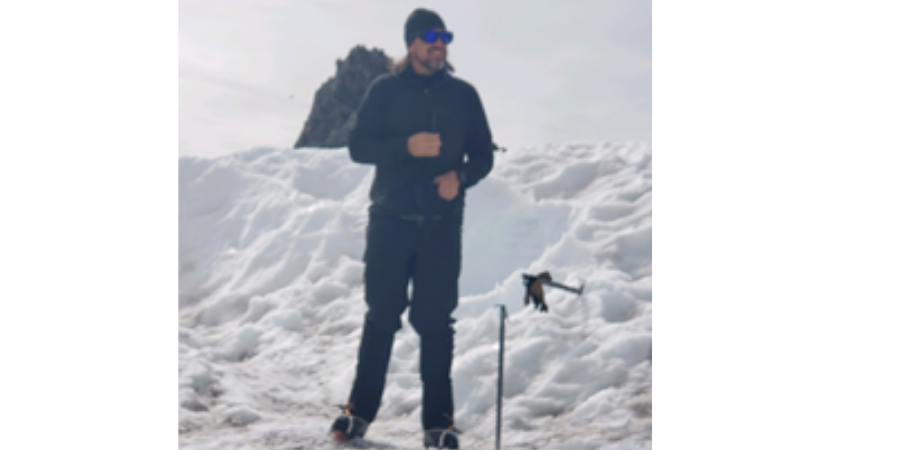
What started last Labor Day with a simple deposit with IMG, our guide company, concluded this July with a blizzard at 11,500 feet. You can climb in snow, and strong winds, and even poor visibility, but up on that mountain we were faced with all three.

We spent a tough night in frigid temperatures. Our tents were blowing like kites on the beach with all forms of precipitation billowing into my tent and sleeping bag. Needless to say, we got a taste of what it is like to be on the top of Rainier that night. Ultimately, nature decided it was time to descend off a ridge to safer and lower Camp Muir at 10,500 feet.

There is an incredible satisfaction that comes from doing hard things. Hard things take time. They’re complicated. They frustrate you when your progress does not seem to equal your effort. Climbing that mountain took me to a familiar place – the perfect metaphor for my journey with Placers.

Starting a business from scratch can often feel much riskier, challenging, and fraught with more setbacks than climbing big mountains. Truly. While this experience is impossible to summarize in a brief blog,

here are six lessons I learned throughout the process that can resonate across many aspects of life:

Lesson #1: People will opt to take the path with no pain or little resistance. As human beings, we are wired to prefer easy, soft, and no danger. Running towards danger takes practice.

Practicing the mental and physical discipline required to prepare for the climb made it easier to maintain the same rigor in the rest of my life. I came back not wanting to give up the gains of being in the best shape of my entire life. I’m more disciplined than I’ve ever been. By the way, this includes my time in high school when I could run a six-minute mile in August heat. Today, this old guy could outwork that young defensive end with ease.

Lesson #2: Not everyone likes change. It takes guts to go your own way and be who you want to be.

At 51, I learned that pain does not mean you can’t do it. I have arthritis. Getting up from a chair hurts at this point. But that’s the thing – it hurts whether I work out or not, so I work out. I get up and move. I strive towards self-improvement even when it’s uncomfortable. Nobody is going to do it for me.

Lesson #3: Being mentally tough requires you to work past stressful situations or temporary pain.

Getting up at 3:45 am to meet my trainer went from something I dreaded to something I craved. Was I going insane? Maybe a little. However, I found that the more folks thought it was crazy the more it made sense to me. After all, climbing a mountain is crazy. Preparing to climb the mountain wasn’t going to happen without a little dash of madness as well.

Lesson 4: We rarely maximize ourselves on a day-to-day basis.

As a leader, I challenge others frequently to determine if they maximized their day. Did they really give everything they had? Do they know the gap between what they gave that day and what they are capable of? Achieving big goals is transformative. I am not the same person I was before the climb – I don’t want to be. I have been told I was a bit of an a**hole, grumpy, selfish even. Everyone is 100% right. Getting up early means you go to bed early. Molding your mind and body into shape means you become antisocial by today’s standards. Everything I did further closed my gap – if it wasn’t, I would’ve been failing myself.

Lesson 5: My Dad always told me I wasn’t tough enough or enough of an a**hole to survive running a business through its ups and downs. I am a nice guy. (Well, maybe not as much today. Look out world…) But being an a**hole isn’t requisite to success – persistence is.

I am by NO means an Olympic athlete but over the last few months I have studied what it takes to become one. Mastery of something has a cost and will impact the rest of your life. I coach and write about how it takes 10,000 hours of mastery to become the best in anything. Within that 10,000 hours, there will be sacrifice. Which brings me to…

Lesson 6: Extremes in anything have repercussions. If it means enough to you, learn to be at peace with it. Breathe through it. The struggle makes you stronger.


My wife was the best and biggest supporter in every way. Even down to the very difficult discussion of how to move forward if something bad were to happen on the mountain. She knows it’s better to live dangerously by your bucket list than safely from your living room chair. When you take risks, magic happens.


Tell me, what has been your biggest challenge? How did you prepare? How did you overcome it? What lessons did you take away from the experience? What magic came out of it?

PS) The title of this Outside Insights is from David Goggins – a Navy Seal, Army Ranger, author, trainer and the originator of the concept of callusing your mind!

What 2009 Taught Me

What 2009 Taught Me
In 2009, many businesses ground to a halt – almost a complete stop. Corporate customers stopped buying. Consumer sentiment was down, and people stopped spending. In the U.S., this was our entire economy. Most leaders found themselves navigating uncharted business waters, and leadership became narrowly focused on one thing: survival. I am proud to say I made it through to the healthy market now in its tenth year. However, I remember every vivid detail of how I spent my days as the President of a once #20 Baker’s Dozen RPO firm during the recession. Here is a candid look at my recession-era experiences from that time and the lessons I learned.

Failure is a Good Thing

During the recession, much of my day involved customers calling by the dozens to say they were no longer hiring that year. “Yes, I know we have a contract for services, however, I need you to simply cancel services.” I couldn’t blame them. They were feeling the same pressures I was. I remember the fear, frantic calls, and discussions with my staff and managers. We were living in a whole new world. At first, everyone played nice at work. We were all in this together, right? We were a good company with solid values and a great culture. We could survive anything together. But we were all nervous. Big contracts went away, one right after the other. Our recruiters came to work knowing there were no placements to be made. I’m sure they felt that their clock was ticking. Eventually our business shrunk. Staff had to leave. Or be asked to leave. Everyone was fighting to feed their family and pay their bills – the future trajectory of their career was an afterthought. We all had fewer choices. My people found new jobs. Me? I had to stay and decide if I would run or fight. I’m not ashamed to admit that the “let’s get the hell out of here” path looked all too welcoming at times. But I wasn’t going to give in.

“A failure is not always a mistake, it may simply be the best one can do under the circumstances. The real mistake is to stop trying.” – B.F. Skinner

I stayed and fought. And for a long time, I did every job in the company. And no, I didn’t do it near as well as the folks who left. I worked for less. Some weeks I worked for free. I survived, so no failure…right? Wrong. I failed. But as a company, we emerged stronger through the failure. Here’s what 2009 taught me:
  • Entrepreneurs are only done when they throw in the towel.
  • Money can always be found even if it’s at a premium.
  • My first business was not recession-proof, but you better believe Placers is recession-proof. Here’s why:
    • We make money to save money.
    • We avoid debt to grow.
    • We pay attention to the economy and how it impacts staffing.
    • We move up and down with GDP.
    • We have a good business model that is proven.
    • We’re not a jack of all trades so we can be a master where it matters.
    • We know where we are going and relentlessly work towards that plan.
Throughout the recession, I was humbled. I had to be depressed. I went to work numb. I worked out a lot. I had dinner with my family. I could not work late – there was nothing to work on. Every minute I was not looking for new customers or ways to lower costs, I spent staring at my notebook hoping the answer to my problem would magically find its way on to the paper. What I found out at the end is that painful situations fade. They get better. Everything changes. One of those things was my focus. I was going to learn a lesson from failure and run my business resiliently, and I still do. The biggest lesson? We’ll never, ever, ever, ever quit. How about you?