The Power of Nth Degree Thinking

Imagine you could simply “keep score” of every relationship in life and business. And, for example, if after every interaction your “score” would change depending on how much value you brought to the person you were speaking with.

While for some this idea may be anxiety inducing, it doesn’t have to be! I have a mental scorebook in my head that motivates me to always leave a positve impact on the person I’m interacting with. I don’t stress if I have a few misses, because I know I’ll make it up next time.

I call this mentality Nth Degree thinking and I learned it from my dad, Alan Burkhard. We discuss the Nth Degree mindset in our book Opposite the Crowd, available in audio format here and print here.

Author William James once said “There is very little difference between one man and another; but what little there is, is very important.

To me, that “little difference” is represented by people who strive to provide Nth Degree service in all areas of their life. This could be during business transactions, talking to an old friend or even sitting down for dinner with your family at the end of a long day.

Nth Degree happens over time and little adjustments can make big differences. One of my favorite excerpts from our book is a quote from my dad below that illustrates this idea.

“Everybody’s looking for a big, giant idea that they can patent, compete, and differentiate. Even if you did, within minutes, everybody else would be creating a product all around it that’s just as good, if not better, and you’d be out of business. So the way to do it is simply to do it better. We, the little guys, can do it better.

– Alan Burkhard

Need inspiration to start? I summarize some of the ideas from Opposite the Crowd below:

In business: Task your team with brainstorming how to enhance a specific part of the customer experience. How can you take their experience and make it good, better and best? Leaders – don’t forget to recognize and reward your people for their hard work. At Placers, we have a coin with our values on one side and Nth Degree on the other. This award and $500 dollars is given when someone’s Nth Degree service has a big impact!

In life: Keep track of your personal relationships and remember to check in often. Providing value doesn’t have to come in the form of grand gestures. Sharing a book recommendation, sending words of encouragement or even a laugh over a cold beer provides value.

In all areas: Give yourself grace. Not every interaction will provide value and that’s ok. You won’t be able to show up for others unless you’re showing up for yourself first. If you leave an interaction feeling less than great, consider what you can do for that person next time.

If you take anything away from this email or learnings from Opposite the Crowd, I hope it’s this: Everyone has the power to make a real difference in the lives of others. The small things add up to make a big impact and by having an Nth Degree mindset in every interaction you’ll provide more value than you’ve thought was possible.

And, as always, take care of yourself first. An Nth Degree mindset starts with self care. Be good to yourself.

Until next time, friends.

Chris

Prioritize Your Passions: Tech Leader to Creative Visionary. A Sit Down With Nick Wilkinson – Outside Insights Podcast Episode #37

In this episode Outside Insights, I sat down with Nick Wilkinson, Founder and CEO of Wilkinson Advisory services. Prior to launching his own consulting firm, Wilkinson built a successful career spanning various industries and has collected multiple hats over the years, including CEO, entrepreneur, author, and filmmaker – more on that later.

Nick and I go way back. I first met Nick on the board of a non-profit when Nick was running a global IT firm. I was a young upstart on that board and I still recall the many business and life lessons I absorbed from him and many years later applied when I chaired the same organization.

In true Outside Insights fashion, we discussed Nick’s leadership philosophy, which he explains was shaped by his military background. Nick emphasized the value of servant leadership, where success is achieved through empowering and supporting others. This is a topic you know I’m already passionate about.

I always love catching up with Nick and not just because of his extensive leadership experience and stories of triumph and failures that we toss back and forth. No, what I enjoy most is Nick’s passion and the fact that he truly is a man of many talents.

Not many corporate CEOs can say they’ve also dabbled in scriptwriting and directing – but Nick can. During this episode of Outside Insights, we actually discussed one of Nick’s most exciting milestones yet, the launch of his short film, “The Fast Track Program”.

Inspired by his corporate career, the film encapsulates Nick’s personal anecdotes and lessons learned in a 12-minute story. “The Fast Track Program” is currently being submitted to film festivals, with upcoming plans for a public release.

With the little free time he has left, Nick cultivates his passion for cooking and soccer. In fact, his next creative endeavor, “Olde Boys,” is a soccer-related comedy centered around an old guys’ team from Pennsylvania. This reminds me of my own “old boys” hiking group, the Misfits.

I’m so excited to bring Nick’s story to you all today because it illustrates that your job is only one facet of life. You need to make sure to grow in other areas, too. You gravitate towards your passion for a reason – don’t ignore that call!

Until next time, friends.

Chris

Why Opposite The Crowd?

For the past few years, a significant focus of mine has been working with my dad to write and publish our first book. In the process, we started a podcast that would turn into our cumulative life lessons, finally recorded.

As we started to record, we began to think through what we would call this piece – a culmination of the lessons and theories my dad has developed through his life. The naming process was actually pretty simple – my dad is a maverick and always felt that he belonged somewhere opposite the crowd. And there it was – the title of our first book.

Over time, “Opposite the Crowd” has become our collective mantra. I remember learning what it meant to be opposite the crowd as early as six years old when I was playing with cars on the floor of the first Placers.

So, what does it really mean?

When you’re outside of the crowd, you can take more risks and direct changes in your life versus letting change happen to you.

It’s hard to grow authentically in a large group of people. When you’re opposite the crowd, there are less limitations. We are the architects of our own lives – and we call the shots.

The caveat here is that to live opposite the crowd, you need to know who you are. If you don’t, how would you know which direction to go? We discuss this concept a lot at Outside Insights – take a look at this guide for defining your guiding values, if you haven’t already.

Opposite the crowd means more than just being “different from others”. Those who subscribe to the mindset are building their own way of thinking and getting better and better at it by the day. And, after a while, they see opportunities to improve everything in their lives – even something as simple as how they interact with a grocery store clerk or barista when picking up their morning coffee. We call this mindset Nth Degree thinking and discuss it in depth here.

For many, feeling the call to change how they are living is something they experience as they get older and the idea of breaking free from the crowd and to stop sacrificing their own needs for the comfort of others is more appealing.

When did you have that wake up call? Are you still waiting?

Check out Opposite the Crowd, now available on Amazon and Kindle, to learn what steps you can take today to break free from the crowd to cultivate a life that is authentically yours.

Until next time, friends.

Chris
A Mission for Money Education. A Sit Down With Mark Olazagasti – Outside Insights Podcast Episode #36

Most people have a few, or a dozen, financial mistakes they look back on and really regret. For many, becoming financial savvy is learned through trial and error and living with a few regrets from your younger years is all part of the process.

Isn’t it ridiculous credit card companies send applications to 18 year old kids before they even graduate high school? With predatory practices everywhere you turn and lines of credit increasingly accessible – it’s all too easy to make a few blunders, right? Well, a recent Outside Insights guest is on a mission to help prevent this.

In this episode of Outside Insights, I sit down with Mark Olazagasti, a first generation entrepreneur and lifelong Delawarean. Mark recently retired from his role of managing partner at Info Solutions, an IT infrastructure consulting and managed services company he co-founded.

During our chat, Mark got transparent around his personal experiences with finances. He was raised by a single mother who struggled financially, started a business during the Great Recession and learned tough lessons about debt after making mistakes that many people have before, like buying furniture before being paid.

Now, through his nonprofit YourMoney101, Mark advocates for personal finance to be taught in all Delaware high schools. He also personally provides financial mentoring and education to individuals and companies. As a father to two young people and someone who has learned from past financial mistakes, I think this mission is all too important.

In this episode, you’ll hear:

– Mark’s origin story and lessons learned from starting a business
– Why Mark was inspired to advocate for personal finance education in schools
– Common money and debt mistakes people make
– The importance of tracking income vs expenses
– Managing psychology around money decisions
– Book recommendations for learning about personal finance – include a list below as well for easy reference!

Mark’s Budgeting Spreadsheet

Mark’s Credit Card Debt Payoff Calculator Spreadsheet

Book Recommendations from a finance wiz:

The Index Card: Why Personal Finance Doesn’t Have to Be Complicated by Helaine Olen and Harold Pollack

The Psychology of Money: Timeless Lessons on Wealth, Greed, and Happiness by Morgan Housel

The Subtle Art of Not Giving a F*ck: A Counterintuitive Approach to Living a Good Life by Mark Manson

The Power of Now: A Guide to Spiritual Enlightenment by Eckhart Tolle

Rich Dad Poor Dad: What the Rich Teach Their Kids About Money That the Poor and Middle Class Do Not! by Robert T. Kiyosaki

The Millionaire Next Door: The Surprising Secrets of America’s Wealthy by Thomas J. Stanley and William D. Danko

When I Discovered Self-Care & Never Looked Back

“Thousands of tired, nerve-shaken, over-civilized people are beginning to find out that going to the mountains is going home; that wildness is a necessity; and that mountain parks and reservations are useful not only as fountains of timber and irrigating rivers, but as fountains of life. Awakening from the stupefying effects of the vice of over-industry and the deadly apathy of luxury, they are trying as best they can to mix and enrich their own little ongoings with those of Nature, and to get rid of rust and disease.”― John Muir, Our National Parks

I am the original “Outside-In” guy. Most people throughout my life associate me with the outdoors. Nine times out of ten, I would rather be outside than behind four walls.

I have a group of backpacking friends – we’re in our fifties and sixties and proudly call ourselves “the misfits”. Funny enough, many people hear my name and mistake me for Chris Burkard, the landscape and travel photographer. Plenty of people send me comments intended for him as he takes pictures from the top of his land cruiser in Iceland or treks across active volcanoes. While you won’t catch me ice surfing anytime soon, I am a mountain man at heart.

Yet, I did find myself in an uncomfortable situation last April on the AT in Georgia – for once, I almost couldn’t finish the 55 mile hike. Everything just hurt in a new way. I wasn’t mentally prepared for this wake up call and what it meant.

I came home from the trip sore, bruised, both my body and my ego, knowing I needed to work on myself – and find new answers to maintaining the passions I had been holding on to. Last year, I had to face the reality that I no longer could pretend or “fake my way” through the toughest of days.

As I reflect on the months since my trip, I realize that they’ve generally been filled with stress – so much so that they manifested in physical symptoms. I have lost friends and have had health challenges within my closest family circle and generally have been in a fog for months. My mentor often says that everyone we meet will have “life stuff” going on every day. For some of you, it may be new health challenges, or maybe relationship woes. Or, for others, one of the greatest hits of all, money, finances, debt, paying for a life well lived. We all have “stuff”, and my stuff is not more important than yours. I simply want to talk about how I am learning to deal with my stress and health challenges and perhaps, from my story, you can help yourself, too.

I have talked before about having Rheumatoid Arthritis (RA). I am lucky that I have a mild case, currently. All my major joints hurt and swell from time to time, and sometimes, the fatigue hits me like a seismic shock. For most of my life I was referred to as the energizer bunny – I would perk up at the mere mention of a new adventure and never turned down a trip – but the last few years have just felt – different.

We all have triggers. My RA flares up with certain foods, from a stressful event in work, or anything that creates duress for my mind and body. I do not want sympathy, believe me. I still walk the pups, Ziggy and Gracie, every morning. I work out three times a week, and can generally still rally for what the day requires.

When the going gets tough, the tough get going – right? At least, that’s what I always thought. When you’re faced with a challenge, you buckle down and work harder and longer. Hell, we’ve even inspired this mentality at Outside Insights a time or two.

All that holds value, but here’s the thing – we’re all human, and humans need a break.

So, how do we deal with the chronic stress that is keeping our body in constant fight or flight and stopping us from reaching our full potential every day? How do we heal? How do we rest and recover and not just tough it out?

I am a leader, an entrepreneur, a father and a husband. For years I believed I simply needed to persevere – until I couldn’t anymore.

One day, I discovered and really explored the concept of self-care. The term sounds pretty cheap and flimsy, right? Like something “extra” that nobody really has time for. What I’ve come to learn is that even if you don’t make time for the little thing called self-care – your mind and body will force you to within time.

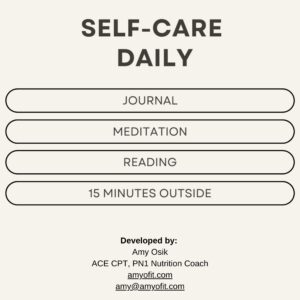
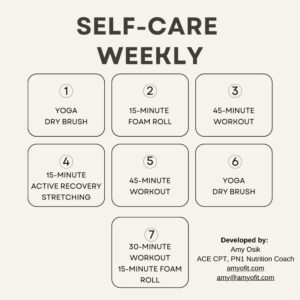
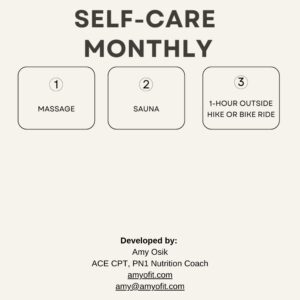
Self-care is how we recover and repair our bodies and minds and heal ourselves – and it looks a little different for everyone. Here’s how I practice self-care:

For me, self-care looks like meditation, yoga, journaling, active stretching, working out and reading.

It’s honoring my time outside, not as a “nice” to have but as my personal form of worship. It’s healing my body in the sauna and hot tubs and investing in massage therapy.

It’s the “simple things” that oftentimes seem impossible in our fast paced world – like getting enough sleep or eating whole foods. Hell, even drinking enough water.

Self-care is exploring and fostering hobbies that fill your tank and not necessarily your pockets.

Self-care is taking the time to reacquaint yourself with the body you’ve known for years as you strive to understand what it’s telling you in the form of aches and pains.

Self-care is realizing that while the actions mentioned above seem simple enough – most of us don’t honor our minds and bodies enough to actually do them.

Self-care is understanding that something needs to change and taking the hard steps to make change happen. It’s committing to showing up for yourself, everyday.

You only have one body and our minds require just as much nourishment – take care of yourself today if you want to continue to look forward to tomorrow.

Hope you get something from my self care plan.  My friend and coach Amy Osik helped me figure it out!  I could not have done it without you!  Need fitness help reach Amy here.


Have you had a similar wake up call that reframed how you prioritize self-care? What inspired this epiphany and how have you changed since? Reply back and let me know.

Until next time, friends, and my group of traveling “misfits”.

Chris