Taking Control of Your Career in 2024: A New Beginning

As we step into 2024, it’s a time for reflection and planning as we work to consider the endless possibilities of the new year. Many New Year’s Resolutions involve honing our skills, new and old, advancing our careers, and nurturing our dreams. Self-improvement is crucial for getting to know ourselves. Understanding our desires and aligning them with our life and career choices go hand in hand.

Last year, my dad, Alan Burkhard, and I launched our book, “Opposite The Crowd.” If you haven’t checked it out, you can find it on Amazon. One key theme discussed in our book is the concept that the workforce is now fully in charge of their careers. But what does that really mean for the average person in 2024?

The world of work and the workforce have evolved over time. From the Industrial Revolution to the Tech Revolution, we’ve seen remarkable changes. In fact, change has been the only constant. The post-pandemic world has brought about significant transformations. Some industries ground to a halt, while others accelerated, such as remote work. And the recent global pandemic accelerated these trends tenfold.The job landscape has seen dramatic shifts, and the supply chain and e-commerce sectors have had their moments in the spotlight. Big data and technology drove a “War for Talent,” and healthcare and hospitality are striving to recover the talent they temporarily lost.

The pace of change in the workforce has been faster in the past few years than in the preceding decades. Amidst this chaos, one thing is clear: you must take charge of your own career. Those who know how to do so hold a significant advantage. Businesses no longer serve as authority figures, setting career paths for the individual. In my opinion, this shift in responsibility is a positive one. We should quarterback every aspect of our lives, including our careers.

In short: “The winner will be the workforce”, a quote from our book Opposite the Crowd. Employers have had control for far too long. They’ve dictated our salaries, work hours, locations, and job descriptions. But history has shown us that employers can’t guide our 50-year careers. Companies change, merge, and fail, and technology drives change faster and faster.

People today desire meaningful work. In our careers, we can expect to have multiple jobs, acquire new skills, and potentially hold job titles that haven’t been invented yet. We yearn for purpose, flexibility, and opportunities for growth. Every generation has a unique perspective on work, and we can learn from Gen Z and Gen Y that there’s more to life than just work. Knowing what makes you happy and what you want from life is as important as the money you earn.

Today, we’re like the cowboys of old Western movies, each with a unique tool belt boasting the skills we’ve acquired. The key is to keep improving these skills, making them transferable to different employers over time.

What does this look like in practice? Take Mary, for instance, a lifelong marketing executive in the financial world who embraces gig work to diversify her skills and explore new industries. She embodies a growth mindset, serving as a change agent, and takes responsibility for her career’s direction.

In the past, companies managed our careers, but that’s changing. Loyalty and tenure are no longer the priorities. Companies must adapt to survive, and even in the safest industries, change is inevitable. We often cling to the familiar, missing opportunities for growth and change.

As employees, we have a unique opportunity, but we need guidance to navigate the new landscape. Employees will increasingly take the lead, interviewing employers rather than being interviewed. Portable skills that can move between companies will become the norm, and flexibility will be a valued benefit.

Managing your own career involves planning, continuous learning, and taking charge of your path. It’s about understanding the “why” and “how” of your career and seeking professional help when needed. We’re entering an era where individuals set their rules, and change presents opportunities.

New industries and services will emerge, and career agents can play a crucial role in helping individuals navigate this dynamic landscape. Investing time in self-improvement, actively participating in your industry, and considering career coaching can make a significant difference.

The world of work was already changing, but the pandemic accelerated and deepened these shifts, creating new opportunities for careers, even if they came in the form of silver linings. Being responsible for your own career means dedicating time to self-improvement and pursuing what you truly want.

Consider updating your resume regularly, but don’t forget to treat managing your career as if it’s a part time job in itself. It’s an investment that pays dividends. Investing in YOU will never be a decision you regret. The world of work is evolving, and it’s up to us to shape our destinies and make the most of the opportunities that come our way in 2024.

What’s on your resolution list for the new year? Reply and let me know — career related, wellness related, or otherwise. By the way, if you are wanting to talk to someone about your career or professional changes you want to make in 2024, click here to talk to someone at Placers.

Here’s to a great 2024, friends.

Chris

Finding Success Off the Corporate Ladder – A Sit Down WIth Chris Bystriansky – Outside Insights Podcast Episode #40

In this episode of Outside Insights, I chat with Chris Bystriansky, an author, attorney, real estate investor, coach, speaker, and endurance athlete. Yeah – some people really can do it all.

During our discussion, Chris shares his journey from a challenging childhood to pursuing higher education and then eventually finding himself climbing the corporate ladder. He then shares how his focus turned to identifying passive income streams, like real estate investing. Through his ventures, he realized the corporate path didn’t guarantee happiness or fulfillment.

Chris emphasizes the importance of having multiple income streams and passive income as a safety net against potential job losses. He shares his philosophy on overcoming inertia and embracing change, even though it’s difficult. I really feel like we can all take something away from his experiences.

I loved hearing how Chris taught his young daughter about investing and passive income. He paid her to do chores, then let her “buy” household assets like their toaster. He paid her weekly “rent” for the family using her toaster, giving her hands-on financial literacy. She even charged late fees! Ultimately laid off from chores, she still earned rental income from “owning” items. This clever firsthand investing lesson inspired Chris’s book “Renting From My 6 Year Old

When he’s not building passive income, Chris works to push his physical and mental limits through endurance events like Ironman triathlons. His book New Steel relays how we can overcome challenges and do more than we think possible. I identify with many lessons in this book as regular listeners know I’ve had my fair share of physical and mental health journeys.

Key topics we cover in this episode include:

  • Taking control of your career path and why the path least traveled may be the best
  • Teaching financial literacy to your children early to set them up for success
  • The importance of building a financial safety net and passive streams of income
  • Continually challenging yourself, both physically and mentally
  • Why you should focus on making progress in small steps rather than getting overwhelmed trying to make sweeping changes all at once.

I hope you find as much value in this conversation as I did when I connected with Chris. One of the best ways to improve yourself is to surround yourself with people that inspire you – and I sure left this conversation feeling inspired.

Until next time, friends.

Chris

Books Mentioned:

– Renting From My 6 Year Old by Chris Bystriansky

– New Steel by Chris Bystriansky

– How to Win Friends and Influence People by Dale Carnegie

– Can’t Hurt Me by David Goggins

– Living With a SEAL by Jesse Itzler

Chris Bystriansky’s website:

https://chrisbystriansky.com/

My Holiday Lifesaver (Soon to be Yours)

I have been open about my health journey and have discussed candidly in my self care blog. This year I have been, not so simply, learning to breathe. I found that I was kind of stuck in that fight or flight mode, where your nervous system is stuck in a constant state of stress.

This mode is reserved for saving our lives running from wild animals or in modern times stepping out of the way of a moving car or stressful situations at home, work and life. Our bodies release cortisol, whether it’s a mountain lion chasing you or whether you’re facing a financial crisis. To our minds and bodies it’s all the same.

If we are always stressed, we never return to a baseline of normalcy, and for me, I found this stress state looked like:

– An inability to be at peace in the present moment

– Overreacting or irritability

– Being exhausted, no matter how much sleep

– Gut issues (thank you for helping me figure this one out, Dr. Thompson!)

My guess is you’re nodding your head along with this piece because you get it. Especially during the holidays with travel, visiting with family, spending on gifts – even good stress is still stress!

The real key is our ability to activate our parasympathetic nervous system so we can rest, and our body can conduct all of its normal functions and then commit to making it a habit. Many of us know the secret to managing our stress but don’t carve out time to invest in ourselves to actually manage it. What we eat sure helps, but it takes time to cook nutritious meals. Mindful activities like yoga and meditation practices work too, but people don’t often have time to visit their local yoga studio.

Personally, I found that yoga, reading and meditation work for me. However, that’s not always practical in real life. What do I do when I only have a minute to spare? Or when my week gets out of whack and I don’t have the time to take care of myself quite like I should?

Well, here’s my simple hack to experience a mindful minute anywhere:

Try 4-7-8 Breathing. Take a few deep breaths in and out  and take a half breath in at a four count, hold for seven seconds, and let it out for eight.  Repeat two more times.

I learned this from my doctor, Dr. Thompson, who I widely credit for helping me get my RA under control and specifically helped me manage my stress. Check out this video from Dr.Thompson demonstrating this breath work.

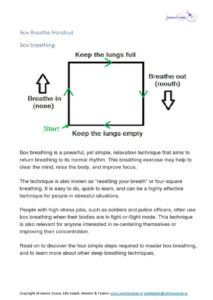
I have also been experimenting with other breathing exercises that you might like to explore. Without a doubt, controlled breathing is the quickest and most effective way to bring your nervous system back into balance when triggers arise. Slow breathing for at least one minute activates your “rest and digest” mode and helps the body return to baseline. My good friend Shay, Yoga extraordinaire, was kind enough to demonstrate a couple other breathing techniques that have been lifesavers for me. Be sure to try alternate nostril breathing and box breathing.

The techniques I explored here only scratch the surface and I know each and every one of you has a stress reduction trick that you turn to. Please reply and share with me – I’d love to discuss what works for you!

Until next time, friends.

Chris

A Misfit Thanksgiving – Outside Insights Podcast Episode #39

We’re officially kicking off the 2023 holiday season this week! With that in mind, I wanted to bring you some fun, lighter content to be consumed while recovering from too much tryptophan and your leftover turkey.

Thanksgiving is a time to count our blessings and to recognize our abundance and it is my hope that you spend this long weekend with your loved ones, friends and family and with your community. Thanks for being a part of my community, whether that’s through Placers, Outside Insights, Opposite the Crowd or wherever our journeys may have crossed.

This episode of Outside Insights is endearingly named the “Misfit Thanksgiving Special” and features my backpacking group and some of my longest friendships.

What is a Misfit, you might ask? If you ask old Merriram Webster, a misfit is a person whose behavior or attitude sets them apart from others in a conspicuous way, IE) “A motley collection of social misfits”.

My personal group of Misfits has bonded over all things backpacking over the years and, as we get older, are still endeavoring to live life enjoying the outdoors. We tell bad jokes, often, are regular raconteurs on the trail, discussing our successes and setbacks. We even remember to take a selfie or two for our folks back at home.

When dubbing our group the Misfits, little did I know that there is also a common thing called a Misfit Thanksgiving. Started by Nashville musicians who could not travel home for the holidays, Misfits got together with friends in the area, or frankly anyone else who did not have a place to go for the holidays. If you ask me, this concept perfectly lives up to the spirit of Thanksgiving: Spending time appreciating our bounty, breaking bread and being with your community – whoever that community may be.

A Misfit Thanksgiving is inspired by the fact that family can be found anywhere and often has little to do with blood.

My Misfits have regular meetings, training schedules, group by-law and even t-shirts. But at the core, we’re really just a group of men from all walks of life finding common purpose out on the trail – and prioritizing our mental and physical health while we’re out there. Our group mantra has informally become a quote by John Muir, included below. We say it often and we mean it.

“Thousands of tired, nerve-shaken, over-civilized people are beginning to find out that going to the mountains is going home; that wildness is a necessity.” – John Muir

I’m so excited for you to learn more about the Misfits during this episode of Outside Insights – I think everyone can take value away from our discussion. Maybe you’ll even see a little of yourself in one of their stories. During the podcast, I’ll guide the discussion as you hear from Mark, the founder of the Misfits, Jack the retired photographer and resident botanist who can outhike all of us, Chris (the other Chris), our master chef and resident gearhead, and Ray, the guy who never sits down and guarantees us a campfire most of the time.

Some fast facts about the Misfits:

  1. We have 30 plus trips accomplished since 2007 including the White Mountains, John Muir Trail, Mount Rainier, and every backpacking loop you can think of from Georgia to New Hampshire,
  2. We are section hiking the Appalachian Trail although we need to pick up our pace.
  3. We all have a love for gear and it keeps getting lighter. My pack went from 50 pounds to 32 over 30 years!
  4. We met over service, three of us were Rotarians and love the outdoors.
  5. Bourbon is the Misfit Celebration beverage of choice!

And, I’ll leave you with a couple other quotes from John Muir. It’s nearly impossible to choose just one.

Happy Thanksgiving friends, thank you again for being part of my community.

“Everybody needs beauty as well as bread, places to play in and pray in, where Nature may heal and cheer and give strength to body and soul alike.” – John Muir

“In every walk with Nature one receives far more than he seeks.”- John Muir

The Evolution of Sales – Less Push and More Consultative

All businesses share a fundamental goal: finding buyers for their products and services. In today’s dynamic marketplace, where competition is fierce and noise is abundant, it’s crucial to differentiate yourself and connect with prospects on a deeper level. This is where consultative selling comes into play—a powerful approach that goes beyond traditional sales techniques. By building trust, understanding prospects’ unique needs, and delivering exceptional value, you can transform your sales process into a genuine partnership.

In this article inspired by a chapter from Opposite The Crowd, a book co-authored with my father, Alan, we’ll explore the evolution of selling, the essence of consultative selling done right, and how you can incorporate these principles into your business to achieve remarkable results.

Many factors come into play with how companies do business. The history of business, global competition, automation and technology have caused distinct phases of selling.

As products were first mass produced, sales looked an awful lot like pushing. The more people I ask, the more people will buy – it was simply a numbers game. But, buyers soon wised up to this practice. And today, buyers are more apt than ever to throw whatever salespeople are selling into the proverbial “spam” folder. It’s more challenging than ever to cut through the noise.

In response, “pull selling” rose in popularity.  Pull selling highlights features and their benefits to consumers. Whenever I teach this concept the comical and sensationalized infomercials that air at 2 a.m. always come to the top of mind. Can a dishrag really be that much better than any other? Can it really soak up a gallon of water at once? I’m a skeptic. Is pull selling better than push selling? Yes. But consumers are wiser than ever.

As buyers became more discerning, a new approach emerged—consultative selling.

Consultative selling goes beyond simply presenting products and features. It’s about becoming a trusted advisor who deeply understands the prospect’s challenges and offers tailored solutions.

However, a crucial hurdle emerged—prospects were wary of salespeople asking probing questions without establishing a genuine relationship. To overcome this, consultative selling must transform into a service function, embodying authenticity and transparency. It’s not about pushing for a sale; it’s about demonstrating value and earning the right to engage with prospects.

Good consultative sales must become a service function, in a real and authentic way. And no, this isn’t as simple as changing the term from sales to customer service.

So, what exactly does consultative selling done the right way look like then? Or, at least, what is the Burkhard way of doing consultative selling?

To succeed in consultative selling, we follow the Burkhard Way—a proven framework that combines strategy, empathy, and value creation. Let’s dive into its key components:

– Provide value up front: After speaking with a prospect, we come back with a business summary and solutions that are directly aligned with their specific issues. Our summary has real value, too. We’ll give our prospect everything we learned, which may even be more than they’ve realized about their own company. After, we aren’t pushy about the prospect deciding to work with us. They could even take our solutions and discuss them with another agency or partner.

– Your company must work on its story. Prospects need to like and believe in who you are and what you do.

– Work to change customer perception. One of our main goals in our customer-driven culture is to change customer perception. We don’t do this by pushing our services, not taking the time to learn a prospect’s true problems or by providing cookie cutter solutions. To be truly consultative, we need to operate authentically and put our prospect’s needs first, even if that doesn’t result in a sale at the end of the day.

– Truly learn your prospect’s business. Every business is different, the key is to learn a prospective business and have that experience to apply what you know and what you do as a business.

– Be consultative not transactional. Consultative selling is not for transactional selling purposes. Simple transactions can be handled the Amazon way, frictionless and easy.  Consultative selling solves complex business problems.

The bottom line? You need to earn the right to make a sale. By building trust, offering tailored solutions, and exceeding expectations, you can create a lasting impact in a crowded marketplace. Embrace the power of consultative selling, and become the trusted advisor your prospects seek. Remember, it’s not about selling ducks—it’s about earning the right, delivering value, and building relationships that stand the test of time.

Until next time, friends.

Chris